
GTM Engineering · Diamond Solutions Partner
Where HubSpot ends, our integration engineers start.
API integrations, custom-coded workflows, middleware and WhatsApp automation, built by the senior engineer who scoped them and documented so your team can run them.

Sound familiar?
Where native HubSpot stops short.
Every portal hits the same wall: the connector doesn't exist, the workflow can't do the logic, or the data lives somewhere HubSpot can't see.
-
01
No connector for your ERP
Orders, invoices and stock live in a system HubSpot doesn't talk to.
How we prevent itA custom integration through our middleware, two-way, with retries and logging.
-
02
Workflows that hit the ceiling
The logic you need isn't a workflow action.
How we prevent itCustom-coded actions and serverless functions, written, tested and documented.
-
03
Revenue happening on WhatsApp
Conversations, orders and follow-ups that never reach the CRM.
How we prevent itWhatsApp Business connected to HubSpot through treble, with automation on both sides.
Capabilities
Integrations, code and data pipelines.
Six kinds of work, one engineering team. Pick the one that sounds like your problem.
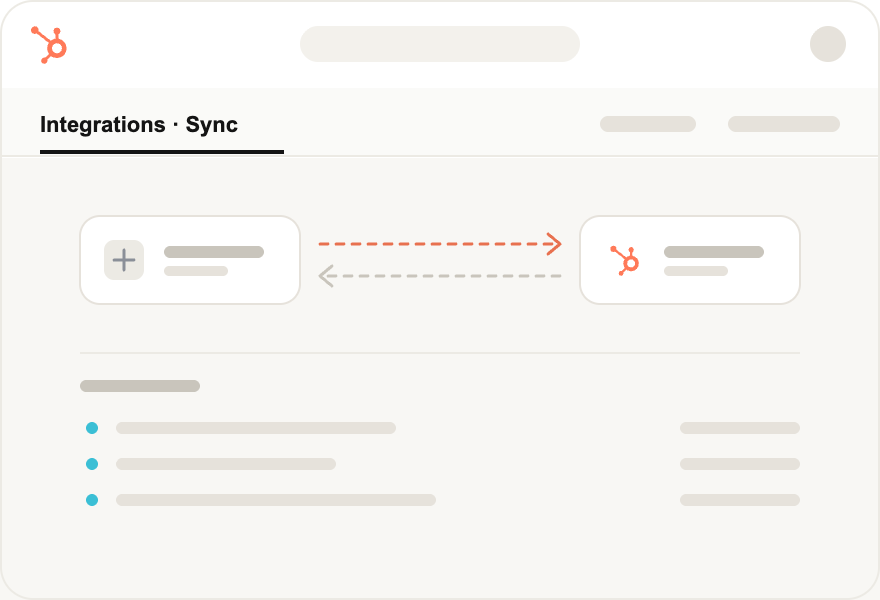
API integrations
Two-way sync with the tools you already run.
- ERPs (NetSuite, SAP, Dynamics, QuickBooks, Xero)
- Billing, e-signature and support tools
- Private apps with scoped permissions
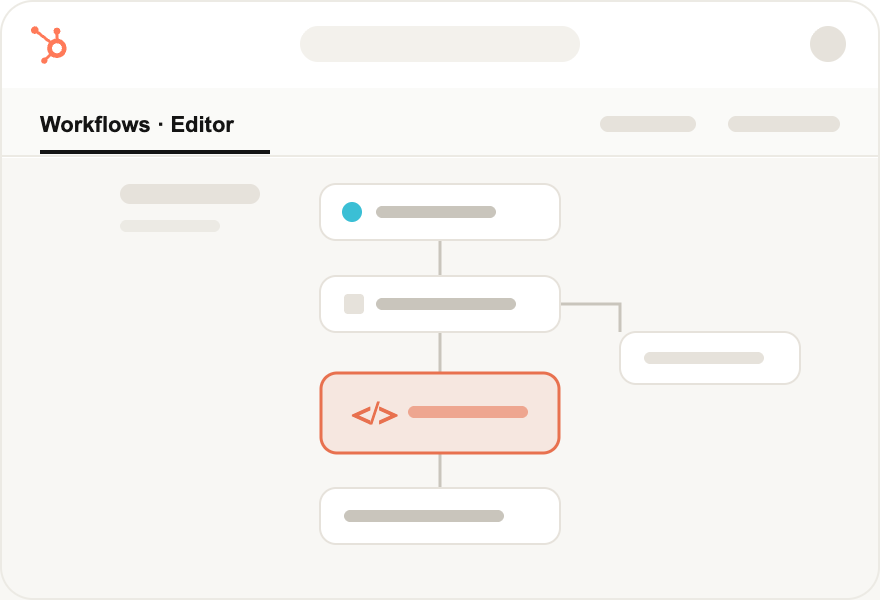
Custom-coded workflows
The logic workflows can't express.
- Custom code actions in JavaScript or Python
- Serverless functions and webhooks
- Scheduled jobs and error handling
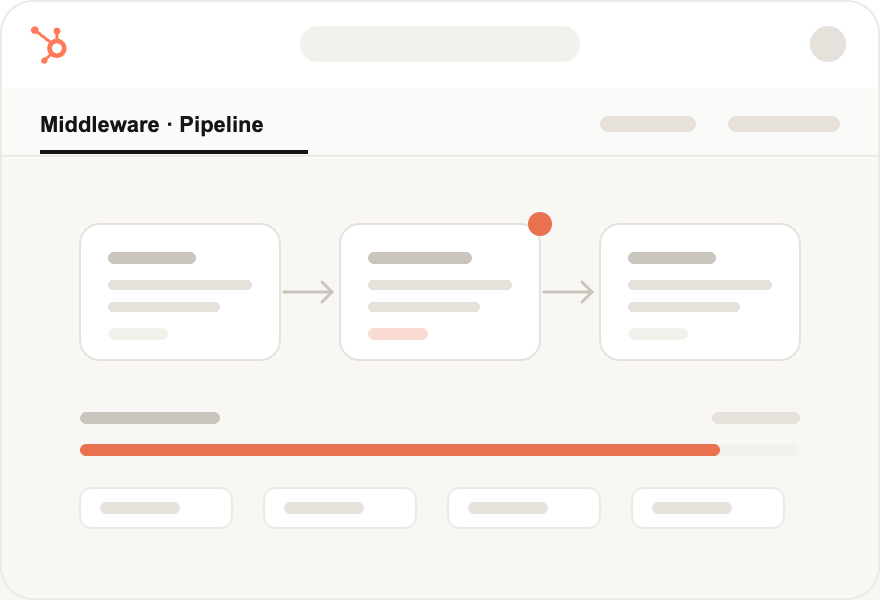
Middleware
Our own integration platform, built for HubSpot.
- Queues, retries and monitoring out of the box
- Field mapping without redeploys
- Audit log for every record touched
WhatsApp automation
WhatsApp Business inside the CRM, through treble.
- Conversations logged to contacts and deals
- Templates, routing and SLAs
- Sales and service automation on WhatsApp

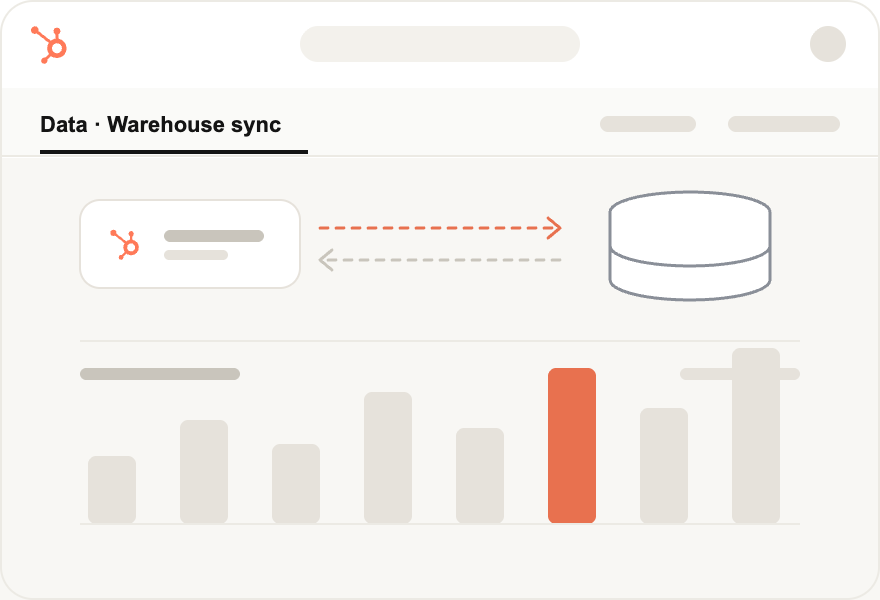
Data warehouse & reverse ETL
HubSpot data where your analysts work, and back.
- Sync to BigQuery, Snowflake, Databricks or Postgres
- Datasets and BI dashboards
- Reverse ETL to enrich records
Prospecting stack
Outbound data flowing into HubSpot clean.
- Apollo + HubSpot setup and enrichment rules
- Sequences and lead routing
- Deduplication at the source

Our platform · Insight Connect
Insight Connect. Built for HubSpot.
Insight Connect is our in-house middleware: the layer that sits between HubSpot and the rest of your stack, moving data in both directions. Every integration runs through it, queued, retried, monitored and logged, so syncs stay reliable and your team can see exactly what moved and when.
See how an integration is scoped

The method
Scoped once, built right.
Nothing is built until the data contract is agreed. Nothing goes live until your team has checked it with real records.
-
1
01 · Scope
Discovery and data contract
Which fields, which direction, which system wins when they disagree. Agreed in writing before any code.
What you get: a data contract and a fixed-price scope.
-
2
02 · Build
Build in a sandbox
Middleware or custom code, built against a sandbox portal with tests for every mapping and failure case.
What you get: a working integration in a sandbox and the test results.
-
3
03 · Validate
Validate with real records
Your team checks real records on both sides; we fix what doesn't match.
What you get: a validation report with your sign-off.
-
4
04 · Launch
Go-live and handover
Monitoring on, docs delivered, your team trained to read the logs and change a mapping.
What you get: a live integration, the dashboard, the docs and a trained admin.
Track record
Integrations that hold up.
-
500+
Projects delivered
-
300+
HubSpot implementations
-
13 yrs
On HubSpot
-
25
HubSpot certifications
-
5.0
Partner rating

-
“
“Great experience, attentive and competent professionals. Highly recommend hiring them!”
Pedro Del Negro Tayer
GTM Data Engineering at Netlex
-
“
“Extremely qualified professionals. We worked side by side with very positive results. Versatile, agile and up to date with best practices.”
Malena Figueiredo
Senior Product Manager at eureciclo
-
“
“Excellence in strategy and full HubSpot implementation, far beyond simple configuration. A human, collaborative approach that delivers concrete results quickly.”
Tulio Ferreira
Head of Sales at Estuda
-
“
“It was a great experience. They helped us with everything from choosing the right plan to overcoming the challenges we faced and completing the onboarding process.”
Felipe Dias
Head of Sales at Teachy.ai
-
“
“They navigate seamlessly between theory, practice and technical depth. Solutions that fit perfectly with our business needs. A truly hands-on company.”
Raphael Santo
Head of Sales & Customer Success B2B at Quero Educação
-
“
“Technical knowledge, accountability and lots of experience. Implementing HubSpot with them was easy. Professionalism above the average. Highly recommend!”
Hari Aizemberg
Marketing Manager at Koper
-
“
“A partner with complete command of the platform. A year after implementation, the partnership and support remain at the highest level.”
Pedro Silva
Technology Manager at Tambasa
-
“
“Insight showed genuine interest in understanding our product and our challenges. The quality of automations and integrations made all the difference. A truly top-tier partner.”
Lucas Rocha
Co-founder at Data Facts
-
“
“Nothing but great feedback! My biggest regret? Not implementing a CRM sooner. Insight Sales made all the difference.”
Fabricio França Lima
CEO & Founder at Power Tuning
-
“
“Super proactive support. We solved our challenges and have been partners for 5 years! Exceeding expectations from day one.”
Henrique Vieira
Managing Partner at Colonial Netimóveis

Common questions
GTM engineering, answered.
What is GTM engineering?
GTM engineering is the technical work that makes a go-to-market stack run as one system: integrations, custom code, data pipelines and automation around the CRM. In practice it means connecting HubSpot to your ERP, billing, support and messaging tools, writing the logic native workflows can't express, and keeping data clean in both directions. It sits between RevOps, which designs the process, and IT, which owns the infrastructure. Our team has done this across 500+ projects, most of them on HubSpot.
New to the role? Read our guide What is GTM engineering.
Can you integrate HubSpot with our ERP?
Yes. We build two-way integrations between HubSpot and NetSuite, SAP, Microsoft Dynamics, QuickBooks, Xero and most ERPs with an API or database access. The integration runs on our middleware, so every sync is queued, retried and logged, and field mapping can be changed without redeploying code. Orders, invoices and stock levels show up on the HubSpot record, and deal data flows back to the ERP when it should.
What can custom-coded workflows do that native workflows can't?
Anything that needs real logic: loops, lookups across objects, calculations, calls to external APIs and branching beyond what the workflow editor offers. We write custom code actions in JavaScript or Python inside HubSpot workflows, plus serverless functions and webhooks for logic that runs outside them. Every action is tested, handles errors explicitly and is documented so your team knows what it does. Typical cases are deal-amount calculations, territory assignment from external data and syncing line items to a billing system.
How does the WhatsApp integration with HubSpot work?
We connect WhatsApp Business to HubSpot through treble, a HubSpot-native WhatsApp platform we partner with. Conversations are logged on the contact and deal timeline, templates and routing are managed from HubSpot, and workflows can send WhatsApp messages the same way they send email. Sales and service teams reply from a shared inbox with SLAs, and every message is attributed to the right record. Setup includes Meta verification, template approval and the automation on both sides.
What is your middleware and why not Zapier or Make?
Our middleware is an integration platform we built for HubSpot projects: queued jobs, automatic retries, a field-mapping interface, monitoring and an audit log for every record touched. Zapier and Make work for simple, low-volume automations, but at production volume they fail silently, charge per task and give you no way to replay what went wrong. On our platform a failed sync raises an alert and is retried, and your team can see exactly which records moved and when. You get the dashboard and the documentation, not a black box.
Can you sync HubSpot with our data warehouse?
Yes. We sync HubSpot objects, properties and associations to BigQuery, Snowflake, Databricks or Postgres on a schedule or near real time, and model them into datasets your analysts can use. On top of that we build the BI dashboards in Looker Studio, Power BI or Tableau. Reverse ETL closes the loop: scores, segments and account data calculated in the warehouse are written back to HubSpot properties so sales and marketing can act on them.
Do you work with Apollo and other prospecting tools?
Yes. We are an Apollo partner and set up Apollo with HubSpot regularly: enrichment rules, sequence sync, lead routing and deduplication at the point of entry so outbound data arrives clean. We also work with Clay, ZoomInfo, Lusha and LinkedIn Sales Navigator exports. The goal is one source of truth in HubSpot, with every prospect enriched once and owned by the right rep.
Who maintains the integration after go-live?
Your team can, and we can if you prefer. Every integration ships with monitoring, alerts, documentation and a handover session, so an admin can read the logs, change a field mapping and know who to call. Many clients keep us on a monthly retainer for monitoring, changes and new endpoints; others run it themselves after handover. Either way nothing depends on a single person's memory.
How much does an integration cost?
It depends on the number of systems, objects and the direction of the data, so we quote a fixed price after a scoping call. A one-way sync of a standard object is a small project; a two-way ERP integration with custom objects, line items and invoice status is a larger one. The scoping call is free and you get a written approach with scope and price before anything is built. No open-ended hourly billing.
Can you fix an integration another agency built?
Yes, and we do it often. We start with an audit: what the integration does, where it fails, what it costs to run and whether the code or Zaps are worth keeping. Then we either stabilise it with monitoring and error handling or rebuild it on our middleware if that is faster and safer. You get the findings in writing before deciding, and the existing integration keeps running until the replacement is validated.
Talk to us
What needs to talk to HubSpot?
Tell us which systems are involved and what should flow between them. An engineer reads every message and replies with a scoped approach, usually within a couple of business hours.
Average reply time under 2 business hours.
All fields required