HubSpot Unbound 2026: What Matters for You and What Has Changed So Far
 Brenda Linhares - Partner & CMO
8 min read
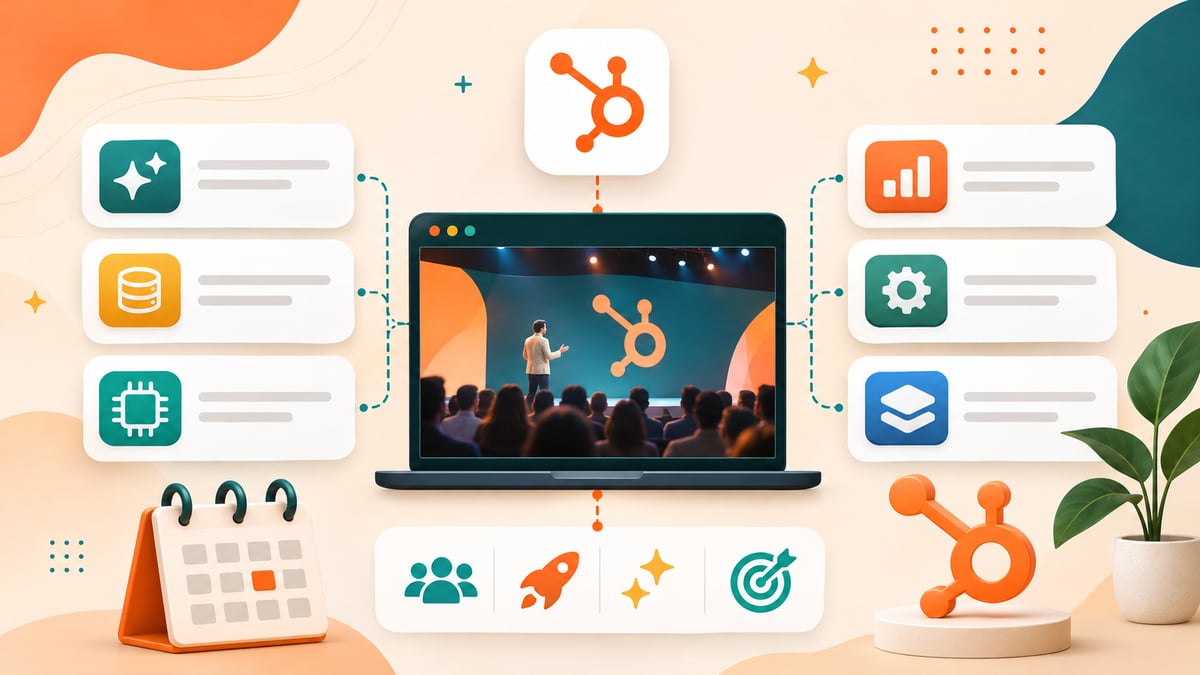
HubSpot UNBOUND 2026 was HubSpot's annual conference, held in Boston from September 16 to 18, 2026, and the first edition under the new name after fifteen years as INBOUND. The main announcement was that HubSpot is now an Agentic Customer Platform built around Growth Context, a layer of business knowledge that every AI agent reads before acting. Alongside it, HubSpot launched Context Home, a rebuilt Breeze Assistant, Marketing Studio 2.0, HubSpot Work and a set of new sales and marketing agents, plus a partnership with OpenAI that makes HubSpot the first CRM integrated with ChatGPT Ads.
I watched the Spotlight keynote with a partner's eye, which means less attention to the demos and more to what changes for the companies we implement HubSpot for. This is the honest cut: what was announced, what is included in your plan, and what to check before you switch anything on.
Why HubSpot renamed INBOUND to UNBOUND
The name change is not decoration. Inbound was a methodology HubSpot invented and built a company around. Retiring it is HubSpot admitting that inbound marketing is no longer the idea that organizes how companies grow. What replaced it on stage was one word repeated for three days: context.
What is HubSpot's Agentic Customer Platform?
The Agentic Customer Platform is HubSpot's new description of itself, organized in three layers. The context layer is what the platform knows about your customers, your business and your team. The action layer is where work happens: the Hubs, the agents and Breeze Assistant. The coordination layer, Agent Hub, is where humans supervise the agents and manage governance.
A naming detail that matters for anyone who trains teams: the Breeze brand is being retired for everything except Breeze Assistant. Breeze Agents is now Agent Hub, Breeze Studio is now Agent Builder, and Breeze Intelligence data enrichment has been folded into Smart CRM. HubSpot's reasoning is that when the whole product is AI, a separate AI sub-brand suggests AI is bolted on.
What is Context Home in HubSpot?
Context Home is a single editable screen that shows what HubSpot currently believes about your ICP, your processes and your team, and lets you correct it. It lives under Agents, then Agent Hub, then Context, and it replaces the old AI Data Sources settings. Values you edit are locked against automated overwrites. Every agent announced at UNBOUND reads Context Home first.
If you take one thing from this event, take this: open Context Home and read it as a stranger would. If it is wrong there, it will be wrong everywhere.
HubSpot UNBOUND 2026 announcements, in one table
|
Announcement |
What it is |
Availability |
|---|---|---|
|
Context Home |
One editable view of what HubSpot knows about your business; agents read it first |
GA, all plans |
|
Breeze Assistant (rebuilt) |
An assistant that executes instead of answering: builds documents, apps, automations and agents from a prompt; adds projects, memory, Slack, voice on mobile (public beta) and, since October 19, editable PowerPoint decks |
GA, all plans including Free |
|
Agent Hub + Agent Builder |
One place to manage every agent; one-click conversion of existing workflows into agents; triggers from Slack, spreadsheets, schedules and external webhooks |
GA, Pro and Enterprise |
|
HubSpot Work |
An AI-first workspace on top of the CRM for projects, tables, forms and internal automations |
Beta |
|
Marketing Studio 2.0 |
A rebuilt campaign command center with Campaign, Content and Nurture agents |
Included with Marketing Hub Pro+ |
|
Prospecting Agent (upgraded) |
On-demand contact sourcing, learns from a rep's edits, scores companies on fit and intent |
Sales Hub |
|
Deal Progression |
Reads emails, calls and meetings on a deal and drafts the follow-ups and quotes |
Public beta, Sales/Service Pro+ |
|
Revenue Agent |
AI accounts receivable that chases invoices and reschedules based on customer replies |
Public beta, all paid plans |
|
ChatGPT Ads + OpenAI partnership |
Run ChatGPT Ads from HubSpot with attribution; pull CRM data into ChatGPT. Expanded on October 26: the connector now creates and publishes HubSpot pages and reads intent signals from inside ChatGPT |
New |
|
MCP and AI connectors |
HubSpot data available inside ChatGPT, Claude, Gemini and Copilot; third-party apps expose tools inside Agent Builder |
Developer Platform 2026.09 |
Which HubSpot features from UNBOUND are included without credits?
Context Home, Breeze Assistant, Marketing Studio, Agent Hub, Agent Builder itself, the core of Deal Progression, AEO and Smart CRM enrichment are included in the plan and consume no credits. Only the metered agents consume credits: Content, Campaign, Nurture, Prospecting, Revenue, Customer, Data and custom agents.
HubSpot also added the governance that was missing in 2025, and then tightened it again on October 15, a month after the event. Every account now gets a default spend cap set at up to 50 percent above its monthly credits, you can set credit limits per feature and per action, usage alerts fire at 75, 85 and 90 percent, simulation mode estimates cost before you publish an agent, and Super Admins can swap unused seat value for credits mid-contract instead of waiting for renewal. Extra credits come as prepaid packs (1,000 credits for 10 dollars) or pay-as-you-go at the same rate. This is the reason I would now recommend switching agents on where a year ago I would have said wait.
What is the self-updating Smart CRM?
The self-updating Smart CRM captures calls, emails and meetings and syncs them to the record without a rep logging anything. Every RevOps team knows the gap between what happened and what the CRM says happened. Closing that gap automatically is less glamorous than an agent that writes campaigns, and in my opinion it is worth more.
What UNBOUND means for middleware like n8n and Make
HubSpot is coming for the automation stack around your portal. Agent Builder can migrate eligible workflows directly, and it now accepts webhook triggers from external tools, which is an explicit invitation to bring flows out of n8n or Make. For companies that accumulated a patchwork of automation platforms, this is the moment to review whether the patchwork still earns its keep.
For the integrations that genuinely need to live outside HubSpot (ERP, billing, legacy systems), the expanded MCP server means HubSpot agents can call those tools natively instead of through workarounds. This is where our integration and middleware work usually starts.
What changed in Marketing Studio 2.0?
Marketing Studio 2.0 is a rebuild of a product that underdelivered in 2024. It now works as a loop: AEO finds a topic where your brand is not being cited by AI engines, Campaign Agent plans a campaign around it, Content Agent writes and grades its own work, Nurture Agent rewrites each email per recipient at send time, and AEO measures again. Workflows can be built inside Studio from a natural-language prompt, which changes who on the team can actually ship a campaign. Whether it works depends on how much your team feeds the agents, but the architecture is the right one.
What is HubSpot Revenue Agent?
Revenue Agent is an AI accounts receivable agent that chases unpaid invoices, reads the customer's reply and reschedules the next reminder based on what the reply actually says. It is the quiet winner of the event: an unambiguous commercial job with a measurable outcome, which is rarer than the marketing around AI agents suggests. It costs 500 credits per invoice, charged when outreach starts.
What to check before adopting UNBOUND features
Most headline features are still in public or private beta as of late October: Deal Progression, Revenue Agent, HubSpot Work and the Content and Nurture agents among them. Confirm availability in your portal before promising anything internally.
One more thing that was only hinted at on stage and became real in October: new HubSpot customers in EMEA no longer buy individual Hubs. They buy one platform edition, pay per seat and get a monthly credit pool that marketing emails and workflow actions also draw from. The US and all existing customers stay on per-Hub pricing for now, but if you work with European companies or agencies, model the new bill before you quote.
More importantly, every agent announced draws on your CRM data to do its job. An agent working from incomplete records and half-abandoned pipelines does not produce mediocre results. It produces confident, fluent, scaled-up versions of your data problems. HubSpot built the action and coordination layers this year. The context layer is yours, and it is the part no vendor can fix for you.
That, frankly, is where we come in. If you want a second pair of eyes on whether your portal is ready for agents, a HubSpot implementation review is the conversation worth having before you switch anything on.
Ready to take your operation to the next level?
Talk to a specialist and see how we can help.