HubSpot Forms API: Capturing Leads From Any Website Without Losing Data
The HubSpot Forms API lets a website keep its own form and send each submission to HubSpot the moment it happens, with the tracking cookie needed for attribution and the ...
What we do · Build
HubSpot ImplementationCRM MigrationsGTM EngineeringHubSpot Reporting & AnalyticsWhat we do · Run
HubSpot Managed ServicesGTM as a ServiceRevOps as a ServiceAI & Agent Hub White-Label Partner ProgramInsights
ArticlesCase studiesRevenue Operations guideGTM Engineering guideHubSpot implementation guideB2B sales guideGTM Engineering guide
GTM engineering is the practice of building the systems behind go-to-market: the data, integrations, automations and AI that find the right accounts, enrich them, route them and turn signals into meetings. A GTM engineer writes code and connects tools so marketing, sales and customer success run on a system, not on manual work.
Definition
Go-to-market teams used to grow by adding people: more SDRs to research accounts, more admins to keep the CRM tidy, more analysts to stitch reports together. GTM engineering replaces much of that manual work with systems. Instead of a rep copying data from five tabs, a workflow pulls company data, scores the account, writes it to the CRM and alerts the right owner.
A GTM engineer sits between RevOps and software engineering. They understand the revenue process well enough to know what should happen, and they can build it: API integrations, data pipelines, enrichment and scoring logic, custom code inside the CRM and, increasingly, AI agents that act on CRM data. The role grew quickly in the last few years as enrichment, automation and AI tools made go-to-market work programmable.
In a HubSpot company, GTM engineering usually means the work that starts where native HubSpot ends: the connector that does not exist, the workflow that cannot express the logic, or the data that lives somewhere HubSpot cannot see.
What a GTM engineer builds
Most GTM engineering work falls into these six areas. Each one removes manual steps between a signal and revenue.
Connecting the CRM to billing, ERP, product, support and data tools in both directions, with authentication, pagination, retries and error handling done right.
The HubSpot API developer guideWorkflows with custom-coded actions and webhooks for the logic native automation cannot express: calculations, lookups in other systems, conditional routing.
Webhooks, workflows and custom codePulling firmographic, technographic and intent data into the CRM, scoring accounts against the ideal customer profile and turning buying signals into tasks.
Ideal customer profile and scoringMoving data between the CRM, a data warehouse and BI on a schedule or in real time, so reports and models read the same numbers the teams work with.
Integrating data from different sourcesLead routing, territory and round-robin logic, sequence enrollment and handoffs between SDRs, AEs and CS, all visible on the CRM record.
See GTM as a ServiceAgents and assistants that read and act on CRM data: research, enrichment, first drafts and triage, with permissions, sensitive data and review steps under control.
AI agents for businessWhere the role fits
The three roles work on the same revenue system. They differ in what they own and in how much they build.
| GTM engineer | RevOps | Sales Ops | |
|---|---|---|---|
| Focus | Building the systems: integrations, data, automation, AI | Designing and running the revenue process across teams | Supporting the sales team and its pipeline |
| Main output | Working code, pipelines and workflows | Definitions, roadmap, forecast and reviews | Territories, quotas, sales tooling |
| Typical skills | APIs, scripting, data modeling, CRM architecture | Process design, analytics, cross-team leadership | Sales process, CRM administration, reporting |
| Works with | RevOps, sales, marketing and data teams | CRO, marketing, sales and CS leaders | Head of sales and sales managers |
| Measured by | Manual work removed, data quality, speed to lead | Forecast accuracy, conversion, retention | Win rate, cycle length, quota attainment |
New to revenue operations? Start with our Revenue Operations guide.
Skills and stack
The tools change every year. The skills underneath them do not.
Objects, properties, associations and pipelines designed so automation and reports have clean data to work with.
REST APIs, OAuth and private apps, scopes, rate limits and pagination: the basics that keep integrations from breaking.
JavaScript or Python for custom-coded actions, serverless functions and data transformation.
Platforms such as n8n, Make or Zapier for orchestration, and middleware for syncs that must be queued, retried and logged.
Enrichment providers, deduplication and matching, and the data warehouse when reporting outgrows the CRM.
Enough understanding of marketing, sales and CS to know what the system should do, not only how to build it.
For a hands-on example, see Integrate HubSpot with n8n: OAuth, scopes and webhooks without duplicate triggers.
How a GTM engineering project runs
Integrations fail when they are built before anyone agrees on what data moves, where and when. A good project follows the same five steps.
01 · Discovery
List every system involved, the records each one owns and the questions the business needs answered. Find where data is copied by hand today.
Result: a map of systems, owners and data flows.
02 · Design
Which fields move, in which direction, how often, what wins in a conflict and what happens when a call fails. Nothing is built before this is signed off.
Result: a written contract the team can test against.
03 · Build
Authentication, pagination, rate limits, retries, idempotency and logging from the first version, not after the first incident.
Result: integrations that survive real traffic.
04 · Validate
Run the sync on a sample of real data, compare it with the source and let the team check the records they know before anything goes live.
Result: a go-live with no surprises.
05 · Run
Alerts on failures, a log of what moved and when, and a backlog for the next automation the team asks for.
Result: a system the team trusts and keeps using.
Two details that save the most rework: paginating the HubSpot API without missing records and webhook retries that survive failures.
Hire, outsource or both
The right model depends on how much there is to build and how often it changes.
A full-time engineer inside RevOps or growth. Fits companies with a steady backlog of integrations and automation, and the leadership to prioritize it.
Senior engineers who scope and build specific integrations and pipelines, with a defined data contract and handover. Fits companies with clear projects and no team to build them.
See GTM EngineeringAn internal owner who knows the business, backed by a partner for the heavy builds and peaks of work. The most common setup in growing companies.
From the blog
The HubSpot Forms API lets a website keep its own form and send each submission to HubSpot the moment it happens, with the tracking cookie needed for attribution and the ...
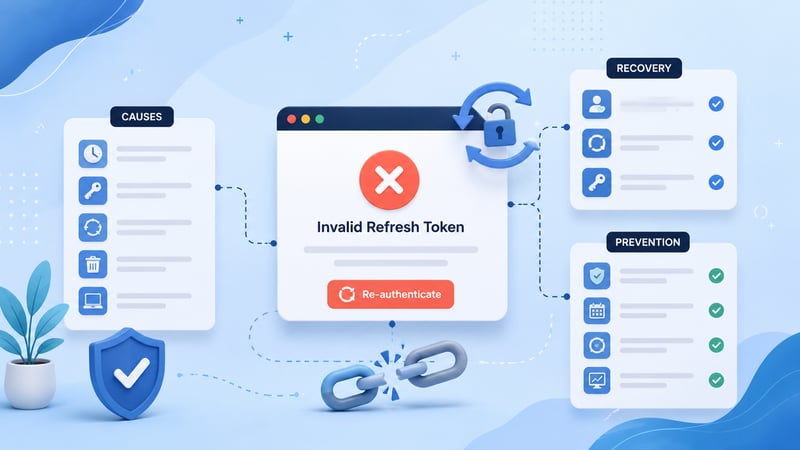
A HubSpot invalid refresh token error (BAD_REFRESH_TOKEN, invalid_grant) means HubSpot has revoked or no longer recognizes the OAuth refresh token, usually after an app ...
Running HubSpot webhooks in production requires validating the v3 HMAC SHA-256 signature, making handlers idempotent because delivery is at-least-once and unordered, and ...
HubSpot custom code actions run Node.js or Python inside workflows within a hard 20-second limit and 128 MB of memory, read credentials from secrets selected in each ...
Integrating HubSpot with n8n reliably means storing the credential in n8n's credential manager, using a service key or OAuth2 for the HubSpot node and a developer API ...
A HubSpot API 403 missing scopes error means the token lacks the scope the endpoint requires; on a private app or service key, save the exact scope on the right app, and ...
Common questions
GTM engineering is building the technical systems behind go-to-market: integrations, data pipelines, enrichment, automation and AI agents that connect marketing, sales and customer success. It turns manual research, data entry and handoffs into systems that run on their own.
A GTM engineer connects the CRM to other systems, enriches and scores accounts, writes custom code for automation the CRM cannot do natively, builds data pipelines for reporting and sets up AI agents with the right permissions. They work with RevOps and the sales and marketing teams to decide what to build.
RevOps designs and runs the revenue process: definitions, lifecycle, forecast and the review cadence. A GTM engineer builds the systems that process runs on. In smaller companies one person may do both; as the company grows the roles usually split.
CRM architecture, APIs and authentication, scripting in JavaScript or Python, workflow and integration platforms, data enrichment and matching, and a working understanding of how marketing, sales and customer success operate.
A CRM such as HubSpot or Salesforce at the center, enrichment providers, workflow platforms such as n8n, Make or Zapier, middleware for critical syncs, a data warehouse and BI for reporting, and AI assistants and agents connected to CRM data.
You probably do if your team copies data between tools by hand, if integrations break and nobody notices, if the CRM cannot express the logic your process needs, or if you want AI agents working on CRM data safely. If you need the outcome more than the headcount, a specialist partner can build it.
Most of it happens through the HubSpot APIs, webhooks, custom-coded workflow actions, private and public apps and the HubSpot MCP server for AI tools. Our HubSpot API guide covers the foundations.
No. Outbound made the term popular because enrichment and sequencing are easy to automate, but the same work applies to inbound routing, product data, billing and renewals, support and reporting.
Need it built?
Tell us which systems need to talk to HubSpot. An engineer replies with a scoped approach and a data contract before anything is built.